Precision Plastic Manufacturing for Modern Vehicles
Precision Custom Injection Molding Solutions For Automotive Manufacturers
Custom injection molding automotive is a manufacturing process where molten plastic is injected into precision-engineered steel molds to produce vehicle components, from interior trim to under-hood parts. This method allows for high-volume production of complex, lightweight parts with exceptional repeatability, slashing waste and per-unit costs. By fine-tuning material selection and mold design, you can achieve tight tolerances and superior surface finishes, making it ideal for everything from dashboards to bumpers. Simply collaborate with a molder on your CAD file, select a resin that meets your thermal or structural needs, and they’ll handle tooling and production.
Precision Plastic Manufacturing for Modern Vehicles
Precision plastic manufacturing for modern vehicles hinges on custom injection molding automotive processes that produce complex, lightweight components with micron-level tolerances. High-performance polymers replace metal in structural brackets, sensor housings, and fluid systems, reducing overall weight while improving fuel efficiency and durability. Advanced mold design incorporates conformal cooling channels to ensure uniform shrinkage and warp-free parts for seamless assembly. How does custom injection molding automotive achieve such stringent tolerances? By utilizing real-time cavity pressure sensors and servo-driven injection units that adjust fill rates dynamically, preventing defects like flash or voids. This precision ensures every interior trim panel and under-hood connector fits perfectly, eliminating rework and supporting the shift toward electric vehicle architectures where thermal management and weight distribution are critical.
Why Tier-One Suppliers Choose Bespoke Molded Components
Tier-one suppliers choose bespoke molded components because they must achieve exacting fit and finish for complex assemblies under stringent automotive quality standards. Custom tooling allows them to engineer critical features like snap-fits or living hinges directly into a single part, eliminating secondary operations and reducing assembly errors. This precision ensures zero-defect integration with adjacent electronics or structural elements, which is impossible with off-the-shelf parts. Since a single poorly fitting component can halt an assembly line, suppliers rely on bespoke molds to guarantee dimensional FOX MOLD plastic injection mold manufacturer stability across millions of cycles, directly supporting lean manufacturing goals by minimizing waste and rework.
Material Selection Criteria for High-Performance Automotive Parts
Selecting materials for high-performance automotive parts demands balancing thermal resistance, impact strength, and chemical stability against weight reduction targets. Engineers prioritize reinforced engineering thermoplastics like PEEK or glass-filled nylon to withstand underhood temperatures and constant vibration without creep. The material must also match the coefficient of thermal expansion of adjacent metal components to prevent assembly stress. Flow characteristics are critical; high-modulus resins require optimized gate placement to avoid voids in thin-wall structural parts. Q: How do you balance cost with performance for transmission components? A: Specify PPA for oil resistance at 150°C, but switch to PA66 with 30% glass if cyclic loads are moderate.
Designing Tooling for Complex Automotive Geometries
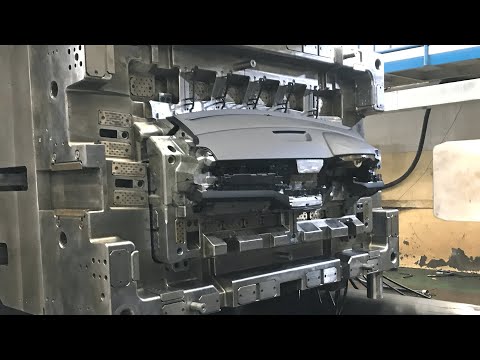
Designing tooling for complex automotive geometries in custom injection molding demands precision beyond standard processes. For intricate undercuts, tight radii, or deep ribs, mold designers must integrate conformal cooling channels directly into the core and cavity, ensuring uniform heat extraction without warping the part. Actuated side-actions or hydraulic lifters are essential for releasing interlocking features, while interchangeable inserts allow rapid geometry shifts between production runs. The steel selection—typically hardened H13 or S7—must withstand high clamp pressures without deflecting, preserving tight tolerances on mating surfaces like dash panels or air intake manifolds. Each gate and vent location is calculated to avoid witness lines on visible trim, balancing fill speed against material shear. This targeted engineering eliminates costly rework and ensures every complex contour meets functional and aesthetic specs.
Multi-Cavity and Family Mold Strategies to Reduce Cycle Times
For complex automotive geometries, multi-cavity and family mold strategies directly slash cycle times by molding multiple distinct parts per shot. Instead of sequencing single cavities, a multi-cavity layout duplicates one component—like identical clips or brackets—cutting per-unit cooling and ejection time drastically. Conversely, family molds integrate different but related parts—such as a dashboard panel and its vent grille—into one tool, eliminating secondary assembly steps. Balancing fill rates across varying wall thicknesses in a family mold demands precise gate placement to avoid warping one part while another cures. Both tactics maximize machine utilization, delivering complex automotive components faster without compromising tight tolerances.
Cooling Channel Optimization for Warpage Control in Large Panels
For large automotive panels, cooling channel optimization directly governs warpage by ensuring uniform heat extraction across expansive geometries. Conformal cooling channels, machined via additive manufacturing to follow complex panel contours, eliminate thermal gradients that cause differential shrinkage and distortion. Strategic placement near thick-to-thin transitions and ribbed sections maintains balanced mold surface temperatures within a ±5°C tolerance, critical for dimensional stability. This localized thermal control minimizes residual stresses during ejection, allowing high-volume production of thin-walled, tight-tolerance body panels without post-mold straightening.
- Implement conformal cooling with cross-section diameters of 6–10 mm to maximize heat transfer without compromising mold structural integrity.
- Balance coolant flow rates across parallel circuits using flow restrictors or baffle plates to prevent hot spots along long flow paths.
- Use simulation to predict and iteratively adjust channel pitch and distance-to-cavity (typically 8–15 mm) for warpage-critical features like bolting flanges.
- Integrate metal 3D-printed inserts for localized cooling where conventional drilled channels cannot reach deep panel draws.
Advanced Polymers Driving Under-the-Hood Innovation
Under the hood, advanced polymers are taking serious heat—literally—and custom injection molding makes them work. These materials, like high-temperature nylons and PEEK, replace metal in parts such as intake manifolds and turbo ducts, slashing weight while resisting oil and constant vibration. The molding process lets you tailor complex geometries for tight engine bays without welding. Q: Why switch from metal here? A: Polymers dampen noise and don’t corrode, plus one molded piece often replaces multiple metal components. This means fewer leak points and easier assembly, all while handling under-hood extremes.
High-Temperature Resins for Engine and Transmission Housings
High-temperature resins for engine and transmission housings replace metal by maintaining structural integrity above 200°C continuous use. These materials combine polyphthalamide or liquid crystal polymer bases with glass-fiber reinforcement to resist oil degradation and thermal cycling. In custom injection molding, specialized tool heating and venting prevent knit-line weakness near bolt bosses. The resins must exhibit a heat deflection temperature exceeding 260°C to survive powertrain loads without creep. Custom tool steel selection with hardened cavities is mandatory to withstand abrasive glass-filled flow during high-pressure molding. Tight shrinkage control (0.2–0.5%) ensures sealing surfaces mate precisely with gaskets or O-rings.
High-temperature resins enable metal replacement in engine and transmission housings through precise mold design and materials sustaining >200°C continuous service.
Glass-Filled Nylon and PBT for Structural Bracketry
For custom injection molding of automotive structural bracketry, glass-filled nylon and PBT offer distinct advantages. Glass-filled nylon provides high tensile strength and impact resistance, ideal for mounting heavy components under hood. PBT offers superior dimensional stability and low moisture absorption, ensuring tight tolerances in brackets for sensors or electrical modules. Both materials withstand continuous exposure to engine heat and vibration. Glass-filled nylon and PBT for structural bracketry allows molders to integrate complex geometries like ribs and bosses directly, reducing assembly needs and weight compared to stamped metal.
Glass-filled nylon and PBT deliver tailored strength, thermal resistance, and precision for under-hood bracketry, enabling durable, lightweight, and integration-ready custom injection molded parts.
Surface Finish Standards for Interior and Exterior Trim
For interior trim in custom injection molding automotive, the surface finish standard typically targets a low-gloss texture, often SPI-A1 or VDI 12-18, to reduce glare and hide fingerprints on dashboards or door panels. Exterior trim demands a higher durability, like VDI 30-45 or textured molds, to resist UV degradation and minor scratches from debris.
A common mistake is using the same SPI polish for both, but exterior parts need a rougher, non-reflective finish to mask weld lines and shrinkage from harsh weather.
Opt for a laser-textured mold for complex grain patterns, as chemical etching wears faster on high-volume tools. Always specify the gloss unit (e.g., 2–4% for interiors, 10–15% for exteriors) during tool design to avoid costly rework.
Class A Surface Replication via Textured Mold Inserts

For custom injection molding automotive, achieving flawless Class A surface replication hinges on precision-engineered textured mold inserts. These inserts, often laser- or chemically-etched, capture microscopic grain patterns for interior consoles or exterior body panels. The molten polymer must be driven at exact pressures and temperatures to fill every valley of the textured tool without washout or gloss mismatch. This process eliminates secondary painting or film application, directly molding a durable, tactile finish that meets stringent automotive glare and scratch-resistance standards. Proper venting and mold surface cleanliness are critical to prevent knit lines from disrupting the replicated texture, ensuring each part emerges with consistent, show-ready quality.
Painting, Plating, and In-Mold Film Integration Techniques
For custom injection molding automotive, surface finish integration through painting, plating, and in-mold film combines distinct methods to achieve specific visual and protective requirements. Painting applies liquid coatings for exact color matching and UV resistance on complex geometries, while plating deposits a metallic layer for chrome-like gloss and corrosion protection. In-mold film integration bonds a pre-decorated film during molding, eliminating secondary operations and enabling patterns like brushed metal or carbon fiber without post-processing. Each technique demands tailored mold surface preparation and process parameters to prevent adhesion failure or film wrinkling.
- Painting: use conductive primers on plastic substrates to ensure electrostatic paint attraction and even coverage.
- Plating: require ABS or PC/ABS blends for electroless copper and nickel adhesion before final chrome.
- In-mold film: match film shrinkage rate to base resin to avoid delamination during cooling.
Cost-Efficiency Through Low-Volume and Prototyping Runs
In custom injection molding for automotive, cost-efficiency through low-volume and prototyping runs is achieved by minimizing upfront tooling investment. Rather than committing to expensive, high-cavitation production molds, manufacturers utilize aluminum or soft-steel tools designed for thousands rather than millions of cycles. This approach directly lowers per-part cost for limited production batches of components like brackets or interior trim.
By validating design, material selection, and assembly fitment on a prototype run, you eliminate the financial risk of scrapping a full production mold due to a flaw.
It allows iterative refinement under real automotive tolerances without the capital burden of hard tooling, making short-run validation a core lever for controlling total project expenditure.
Aluminum Tooling for Iterative Design Validation
For iterative design validation in automotive, aluminum tooling offers a decisive speed-to-market advantage. Unlike hardened steel molds with prolonged lead times, aluminum cavities can be machined in days, enabling rapid testing of geometries and material flow. This agility lets engineers validate snap-fits, draft angles, and wall thicknesses through multiple revision cycles without the sunk cost of steel. The thermal conductivity of aluminum accelerates cooling, shortening cycle times during pilot runs and delivering functional prototypes that mirror production intent. By committing to low-volume aluminum tooling, teams confirm moldability and part performance before scaling to hardened production molds, eliminating expensive late-stage rework.
Bridge Tooling Strategies to Meet Short-Run Production Deadlines
To meet short-run production deadlines, automotive programs leverage bridge tooling as a tactical phase between prototyping and hard tooling. This strategy employs aluminum or soft steel molds to crank out hundreds of functional parts while permanent tooling is still being machined. By accelerating low-volume validation, you sidestep delays in production sign-off and gather real-world performance data for iterative adjustments. The method cuts weeks from launch timelines, allowing engineers to crash-test or assemble components without waiting for final steel. This pragmatic leap from foam models to durable bridge molds keeps supply chains fluid and project momentum intact, directly supporting tight, multi-stage automotive deadlines.
Quality Assurance Protocols for Safety-Critical Components
For safety-critical automotive components, quality assurance protocols must integrate real-time process validation during custom injection molding. Every cycle requires in-process monitoring of melt temperature, cavity pressure, and hold time to ensure repeatability. First article inspection (FAI) includes CMM dimensional checks against CAD models, while material traceability is enforced via batch-specific resin certificates. Non-destructive testing, such as X-ray for internal voids or CT scanning for critical geometries, verifies structural integrity. Statistical process control (SPC) with CpK values above 1.67 is mandatory for release, ensuring that every molded unit meets design intent. Validation protocols also mandate accelerated aging and thermal cycling tests on the finished parts, specifically targeting brittle fracture or creep resistance under extreme loads. All deviation data is logged and locked within the mold’s digital twin for closed-loop corrective action.
In-Process Vision Inspection for Dimensional Consistency
In-process vision inspection for dimensional consistency employs high-resolution cameras and machine vision algorithms to measure critical features in real-time during the molding cycle. For safety-critical automotive components, this system automatically verifies tolerances such as hole diameters and wall thicknesses directly on the production line, flagging any deviation exceeding microns. By analyzing part geometry immediately after ejection, it catches shrinkage or warpage before full production batches are completed, enabling corrective adjustments to process parameters like pack pressure. This relentless focus on real-time dimensional verification ensures each component meets stringent specifications without post-mold sampling delays.
Material Traceability and ISO/TS 16949 Compliance Workflows
Material traceability under ISO/TS 16949 compliance workflows mandates a closed-loop system linking each production batch to its specific lot of polymer, additives, and certifications. Every injection run must log real-time lot genealogy, enabling immediate recall of any contaminated or deviant material back to the supplier. The workflow requires barcode or RFID scanning at goods receipt, pre-drying, and the molding machine, with automated rejection if a lot’s certificate of analysis contradicts specified mechanical properties. This chain-of-custody data is locked into the process control plan (PCP).
- Lot numbers are tied to individual cavity shots via machine-integrated scan verification to prevent mix-ups.
- Each shift’s traceability report must map raw material IDs to final part serials before shipment.
- Nonconforming material triggers an immediate, documented isolation workflow within the QMS.
- Supplier PPAP submissions are cross-referenced against trace records to validate ongoing compliance.
Emerging Trends in Lightweighting and E-Mobility
For electric vehicles, custom injection molding now integrates lightweighting and e-mobility through advanced material science. Molders use long-glass-fiber polypropylene and carbon-fiber-reinforced nylon to produce structural battery housings and thin-wall body panels that reduce mass while managing thermal loads. LSR overmolding creates integrated seals for high-voltage connectors. Gas-assist and foaming processes further reduce part density without sacrificing impact resistance. These techniques allow OEMs to consolidate multiple metal parts into single, lighter polymer assemblies, directly extending EV range and simplifying assembly.
Injection-Molded Battery Enclosures with Flame-Retardant Additives
Modern flame-retardant battery enclosures leverage custom injection molding to integrate halogen-free additives directly into high-performance polymers, preventing thermal runaway propagation without adding bulky metal shielding. This technique allows precise fiber orientation around cooling channels and vent ports, ensuring structural integrity under crash loads while stopping fire spread between cells. The molding process can co-mold conductive pads for early short-circuit detection, enabling real-time thermal monitoring within the wall structure itself.
- Micro-encapsulated phosphorus additives create a char layer at 350°C, insulating adjacent cells for over 15 minutes
- Glass-reinforced nylon compounds achieve UL94 V-0 at 1.6mm thickness, matching steel enclosure heat resistance
- In-mold labeling embeds fire-resistant gaskets for seamless sealing of terminal penetrations
- Variable wall thicknessing concentrates flame-retardant material at high-risk internal corners via flow simulation
Metal Replacement via Long-Fiber Thermoplastic Composites
In custom injection molding for automotive, Metal Replacement via Long-Fiber Thermoplastic Composites delivers structural parts like battery enclosures and front-end modules that match steel’s stiffness at 30–50% lower weight. These direct overmolded compounds flow into complex geometries while maintaining isotropic strength, eliminating secondary assembly steps. Unlike short-fiber alternatives, the longer strands resist creep in under-hood heat cycles, enabling load-bearing brackets and pedal systems to replace die-cast aluminum outright. Q: Does this compromise impact resistance? A: No—entangled fiber networks absorb crash energy better than metal, as validated in door-module impacts during drop tests.
Sustainability in Plastics Manufacturing for Auto Industry
Sustainability in plastics manufacturing for the auto industry is being actively addressed through custom injection molding automotive processes that prioritize material efficiency and part consolidation. By engineering single, complex components to replace multi-part metal assemblies, this approach directly reduces material waste and overall vehicle weight, which lowers fuel consumption throughout the vehicle’s life. Molders are increasingly integrating post-industrial recycled resins into high-performance parts without sacrificing structural integrity, creating a closed-loop material stream. Furthermore, advanced simulation software used during tool design minimizes energy use and scrap during production cycles. These practical, on-the-floor adaptations allow custom injection molding automotive operations to deliver durable, lighter-weight components while actively shrinking their manufacturing footprint.
Post-Consumer Recycled Polymers for Non-Visible Underhood Parts
In custom injection molding automotive, post-consumer recycled polymers for non-visible underhood parts offer a direct pathway to reduce virgin resin dependency while maintaining mechanical integrity. These recycled materials are formulated to withstand constant engine heat and chemical exposure, making them viable for brackets, air-intake ducts, and fluid reservoirs. Molders adjust processing parameters like melt temperature and injection speed to accommodate recycled polymer viscosity shifts without compromising cycle times. Key considerations include:
- Selecting high-MFR (melt flow rate) recycled grades to ensure consistent cavity fill in complex underhood geometries.
- Validating impact resistance at elevated temperatures through controlled molding trials.
- Specifying color-neutral recycled polymers to avoid visual inconsistencies in hidden components.
- Controlling contaminant levels via sorted PCR streams to prevent weld-line failures.
Closed-Loop Scrap Reprocessing in High-Volume Facilities
In high-volume custom injection molding for automotive, closed-loop scrap reprocessing immediately recycles sprues, runners, and rejected parts back into the production stream without leaving the facility. This system grinds post-industrial waste and meters it at a controlled ratio with virgin resin, ensuring consistent material properties for non-critical interior components like brackets or clips. By eliminating external reprocessing logistics, facilities achieve near-zero plastic waste from molding operations while stabilizing material costs. In-process scrap reintegration requires dedicated handling equipment and strict quality sorting to prevent contamination, but it delivers direct, repeatable savings per cycle. Q: What quality controls are essential for closed-loop reprocessing? A: Consistent regrind particle size, contamination checks, and precise blend ratios to maintain melt flow and mechanical specs for automotive parts.
Navigating Supply Chain Challenges for Tooling and Resins
When a Tier-1 supplier demanded a six-week lead time for a custom injection molding automotive interior trim, we hit a wall: the needed glass-filled nylon resin was allocated to medical contracts. We navigated this by qualifying alternative tooling that ran both primary and a drop-in substitute—a PBT/ASA blend. This meant redesigning the mold’s cooling channels mid-build to handle the substitute’s lower shrinkage rate. The steel itself was modified to accept a different gate location, preventing weld lines. We then locked in a quarterly resin buffer for that specific PBT/ASA grade, right from the compounder, so future runs wouldn’t stall. The mold shipped on time, machining chips still on the floor.
Lead-Time Reductions Through Localized Mold Bases
For automotive custom injection molding, sourcing mold bases locally is a direct route to faster cycles. By working with a nearby supplier for the steel block and ejector plate assembly, you wipe out weeks of international shipping delays. This localized mold base sourcing lets you start machining and fitting inserts immediately, shaving time off the overall lead time. It also simplifies communication when tweaking dimensions for your specific automotive part, getting your prototype into production runs much quicker.
Resin Sourcing Strategies to Mitigate Volatility in Petrochemical Markets
For custom injection molding automotive, a robust multi-supplier resin sourcing strategy directly counters petrochemical volatility. Diversifying across geographic regions and polymer grades (e.g., PP, ABS, nylon) prevents production halts when a single feedstock spikes. Locking fixed-price contracts for high-volume, predictable parts creates cost certainty, while spot-buying niche materials for low-run prototypes maintains flexibility. Proactive inventory buffering of critical resins—especially glass-filled or UV-stabilized variants—absorbs sudden price swings without disrupting JIT delivery schedules for Tier-1 suppliers.
By blending contractual stability, regional diversification, and strategic resin reserves, automotive molders can absorb petrochemical shocks and maintain consistent part costs.
What Goes Into Tooling Design for Vehicle Parts
Selecting the Right Steel Grade for High-Volume Molds
How Cooling Channel Layout Affects Cycle Time
Venting Strategies to Prevent Sink Marks on Large Panels
Matching Polymer Properties to Under-Hood Demands
Heat-Resistant Resins for Engine Bay Components
Glass-Filled Nylon vs. Polypropylene for Structural Brackets
UV-Stable Materials for Exterior Trim Applications
Key Steps to Optimize a Custom Mold for Automotive Tolerances
Setting Shrinkage Factors for Tight-Fitting Interior Clips
Balancing Gate Locations to Avoid Weld Lines on A-Surfaces
Using Mold Flow Simulation Before Cutting Steel
Ways to Reduce Per-Part Cost Without Sacrificing Quality
Designing for Multi-Cavity Molds in High-Volume Runs
Introducing Family Mold Layouts for Small Assembly Sets
Recouping Tooling Expenses Through Faster Cycle Rates
Troubleshooting Common Surface Defects in Finished Automotive Parts
Fixing Short Shots on Thin-Walled Ductwork
Eliminating Jetting Lines in Long, Narrow Channels
Adjusting Pack Pressure to Correct Flash at the Parting Line
5 total views, 2 today